Greendot Fashion Awards announced! While others are still “competing on specs”, This textile company breaks through the green challenge with “transparency”
May 20, 2026 | by Qiu Shuchen
At the newly announced 2026 Greendot Fashion Awards, FLYTEC has won two major awards: The "FLYTEC DEFEND Series LCA Traceable Project" received the "ESG Concept Communication Award", and the "FLYTEC Reshaping Wool" fabric won the "Best Technology Innovation Award".
For this company, this is more than just an honor. It shows that the team, which has been almost obsessed with sustainable practices for the past few years, has finally been recognized by the industry.
Best Technology Innovation Award
Award-winning enterprise: Wujiang Flytec Textile Co., Ltd.
Award-winning product: FLYTEC Reshaping Wool (FY24437-1)
Product description: Using FLYTEC's self-developed Reshaping Wool technology, the whole process uses a chlorine-free, physical restructuring method. It has improved natural water repellency, better dimensional stability, natural antibacterial and odor suppression, and a chlorine-free process that reduces reliance on chemical treatments.
ESG Concept Communication Award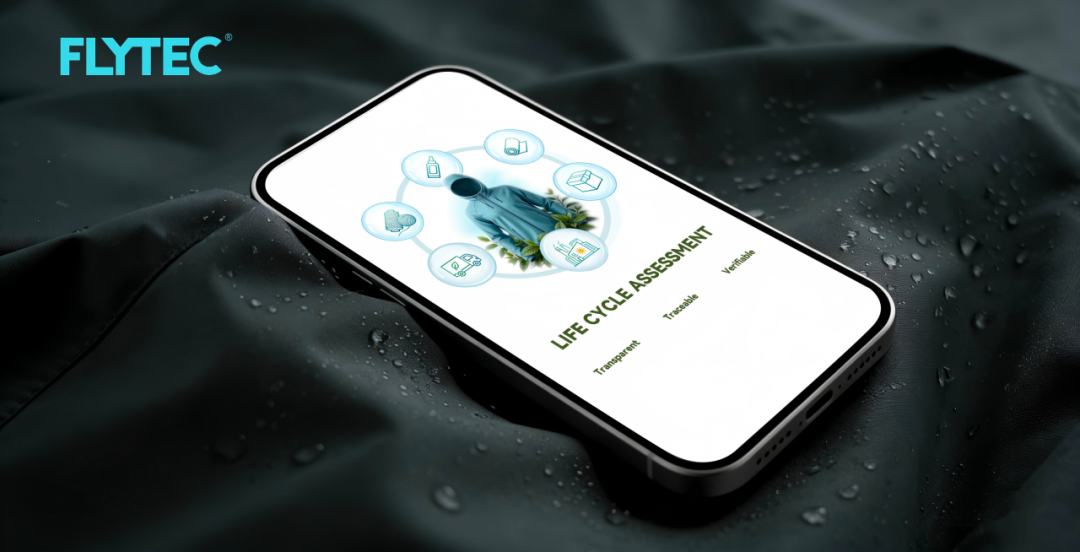
Award-winning enterprise: Wujiang Flytec Textile Co., Ltd.
Award-winning case: FLYTEC DEFEND (FY21086R-131S)
Case description: Against the backdrop of fragmented supply chains, difficulties in consolidating environmental data, and growing demand for full lifecycle transparency, FLYTEC launched its first batch of LCA traceable fabric projects. They brought environmental data forward to the product definition stage, achieving a sustainable lifecycle management upgrade for functional fabrics.
The enterprise has made improvements across four dimensions: materials, processes, workflows, and management. They introduced recycled fibers, PFC-free finishing, and certified raw materials. Using an IPD development process combined with NFC and QR code technology, they achieved full traceability and verifiability of LCA data.
The first batchof projects covered 4 core products and nearly 40 fabrics. It achieved 100% coverage of key LCA data points, digital traceability access, and third-party certification information. Among these, the carbon footprint of 4 core products was publicly disclosed, attracting attention from international sports and outdoor brands.
The award-winning Reshaping Wool fabric focuses on recombining natural materials with functional technology. The FLYTEC DEFEND Series LCA Traceable Project is dedicated to data transparency and verifiability across the product lifecycle. In fact, FLYTEC's LCA work was first shown at the Performance Days functional fabric exhibition in Munich this March.
At that time, the company's slogan "Scan the QR code to see the carbon footprint of this fabric" caught many buyers' attention. By using a phone's NFC function or scanning a QR code, they could instantly get full-chain information including yarn source, carbon footprint, chemical inputs, and third-party certifications. This was the first public presentation of LCA traceable data for the company.
From optional to required: DPP is no longer a task you can delay
At the start of 2026, the release of the EU's Digital Product Passport (DPP) authorization law for textiles is coming soon. According to the plan, this mandatory requirement will take effect in July 2027. A common challenge has emerged: How can data for a piece of clothing truly "flow"?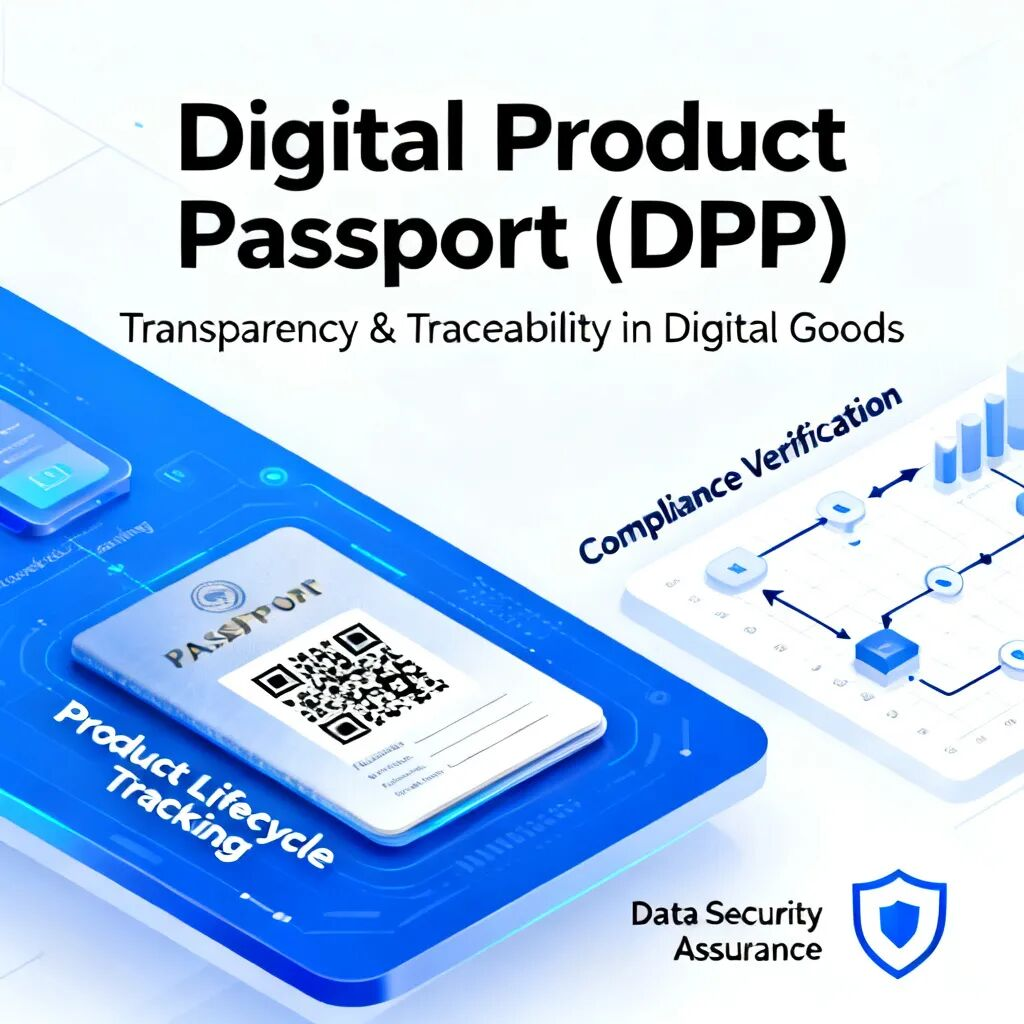
The regulation requires that products entering the EU must use a DPP to disclose compliance certifications, environmental impact, and supply chain information. Without a DPP, products may be kept out of the European market. Textiles are a key sector. DPP information includes compliance certifications, material composition, carbon footprint, durability, and full lifecycle records.
For the global clothing trade, a small digital label is reshaping industry rules.
Industry challenge: Why can't traditional supply chains "grow data"?
Chinese textile companies going global have faced not just uncertainty in tariffs and logistics, but also an increasing number of "compliance" questions. Just after finishing PFC-free, DMF came. Before DMF was sorted out, DPP appeared.
A product manager said honestly: "It's not that we don't want to provide data. It's that the whole supply chain system was never designed to 'know' that data."
A review of mainstream industry supply models reveals a core problem. Trading companies merely fulfill orders without full-chain product definition, resulting in a lack of carbon footprint data. Integrated factories outsource partial production steps, leading to many broken data chains. Vertical factories have fixed processes; even if they want to provide data, it's hard to cover the full lifecycle. When DPP requires complete environmental information from fiber to finished product, traditional supply chains often have to piece things together from scratch. This takes weeks and may still result in compliance delays, higher costs, or even lost market opportunities.
This reveals a key fact: Data is not something you collect after the fact. It must be a capability that is systematically designed.
System difference: Starting from product definition
FLYTEC's approach has been different from the start. The difference is not that they started preparing data earlier. It's that the way they make products has data generation built in.
Using an IPD (Integrated Product Development) model, FLYTEC records yarn source, certification information, carbon footprint baseline, and chemical input list at the product definition stage. Data is naturally collected as the product development process moves forward. It is an organic part of the process, not an extra burden added later.
More importantly, they have a unique supply chain control logic. Although they don't own factories, this "asset-light" structure actually allows them to control each key point. They specify yarn suppliers and certification standards. They set weaving process parameters. They define the list of chemicals for dyeing and finishing. They develop or co-develop membranes. They determine lamination glue and processes. Each step works under their set standards and data framework. If a lower-carbon yarn or an eco-friendlier membrane technology appears, FLYTEC can quickly introduce it and switch. This gives them greater control and completeness over data collection and traceability.
When brands need a DPP, the difference appears immediately
Imagine a scenario: A European outdoor brand needs to submit a DPP report for a product.
In the traditional model, the brand contacts the trading company. The trading company contacts a factory. The factory searches through scattered purchasing and production records. Missing information is patched by repeated emails. The process is long and the outcome is uncertain.
In the FLYTEC model, the brand only needs to provide the SKU information. FLYTEC can then pull a complete, pre-built data package from its database. The compliance process goes from "weeks" to "days".
This is not a difference in effort. It is a difference in system design capability.
Transparency equals trust: From a compliance tool to a competitive dimension
The launch of LCA traceable fabrics is not just a simple compliance demonstration. It is an active experiment in transparency.
FLYTEC’s CEO Zhou Juan understands this clearly: "Being open means being tested. If data is proven false, the company's reputation will face a severe challenge. But precisely because of that, this transparency becomes the strongest trust. It is not simply about replacing an eco-friendly material or adding a few certification labels. What is the most important is finding a new balance between performance, experience, commercial viability, and environmental impact."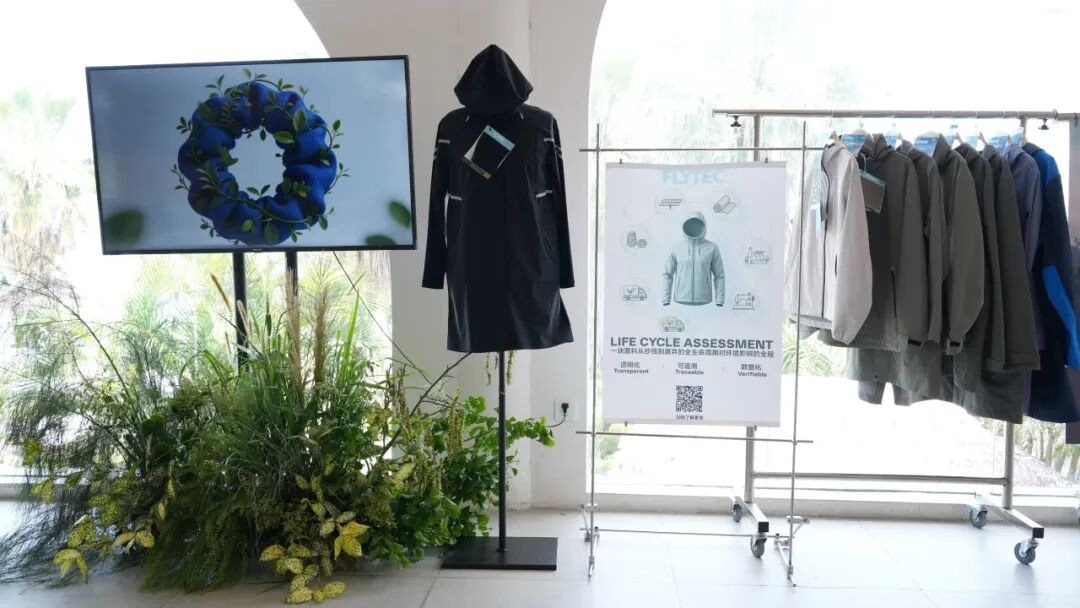
For downstream brands, supply chain transparency is solved upfront. Compliance risk is greatly reduced. In the end market, verifiable traceable data itself is a powerful brand story.
In the short to medium term, companies with data capabilities will be the first to get a ticket to the European market. They will also take a leading position in purchasing decisions and brand trust building. In the long run, the industry's competitive paradigm may shift deeply: from "who can make fabric with better performance" to "who can manage the full lifecycle of fabric." The value of a product will begin to be measured by the completeness and transparency of its data.
Not an end, but an inevitable starting point
With the push for sustainability, the barriers are becoming dividing lines in a new industry reshuffle.
As an industry observer said: "In the past, Chinese textile companies went global relying on cost performance. Now, they must rely on trust. And trust can only begin with transparency."
How far FLYTEC's "transparency experiment" can go remains to be seen. The continuous investment in the LCA system, the breadth and depth of supply chain collaboration, and the long-term maintenance of data authenticity are all unavoidable challenges.
But for FLYTEC, sustainability has never been just about the word "environmental protection."
It is: less harm, less consumption, less waste.
And also: starting from design, less and better!
ALL COMMENTS